Titer Testing 101
A Smarter Way to Protect Your Pet

This guide is for informational purposes and not intended to treat, diagnose, recommend or prescribe protocols for your pet. Please share this with your Primary Care Veterinarian to decide on the best protocol based on your local environment and risks. Vaccination does NOT = immunization as they are not the same thing! In order to truly “protect our pets”, immunization should be the goal since a vaccinated pet (while fairly rare) is still able to contract disease.
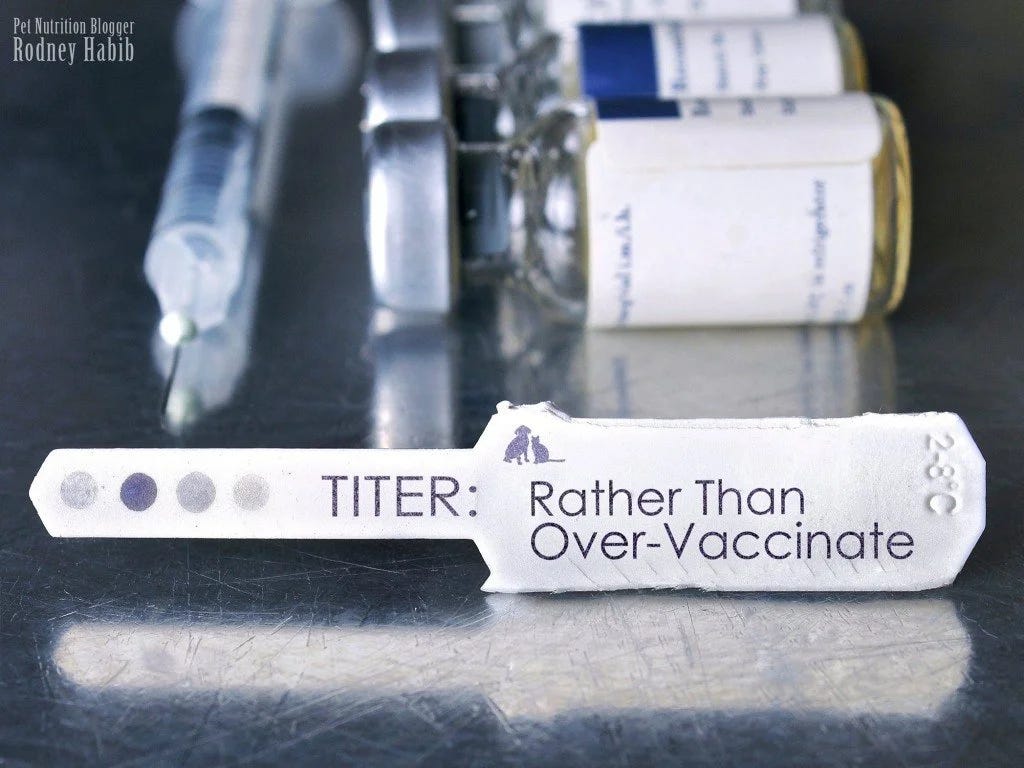
Most pet parents want to keep their animals safe without exposing them to unnecessary medical interventions. Titer testing offers a simple, science-based way to check current immunity before vaccinating — helping you make informed, individualized decisions about their health. If you’ve ever wondered “Does my pet really need another booster?”, then this guide is for you!
WHAT IS A TITER TEST?
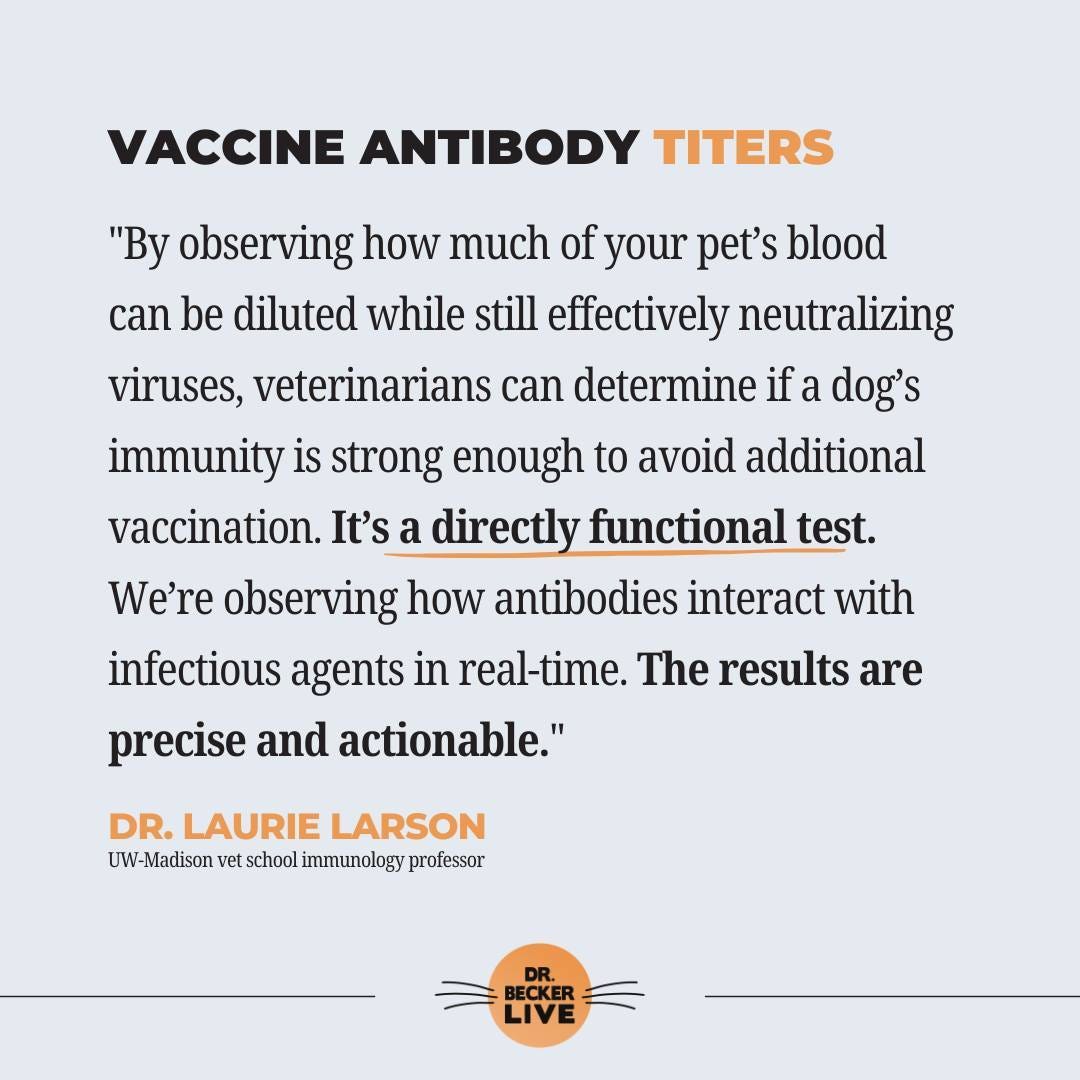
A titer test (pronounced tight-er) is a blood test that measures the level of antibodies your pet has developed from previous vaccinations or natural exposure.
In simple terms, a titer test tells you:
Does my pet already have immunity?
Do they actually need a booster?
Is it safe to delay or skip certain vaccines?
Titer testing is especially helpful for:
Pets with unknown or incomplete vaccine histories
Pets who have experienced adverse vaccine reactions
Pets with chronic illness, immune compromise, & high-risk conditions
Titer tests CAN: provide documentation that many facilities will acceptTiter tests CAN NOT: replace legally required vaccines in most states
Important note about rabies:
Even if a rabies titer shows strong immunity, state laws still require revaccination at set intervals unless a medical exemption is granted.
WHY TITER VS BOOSTER?
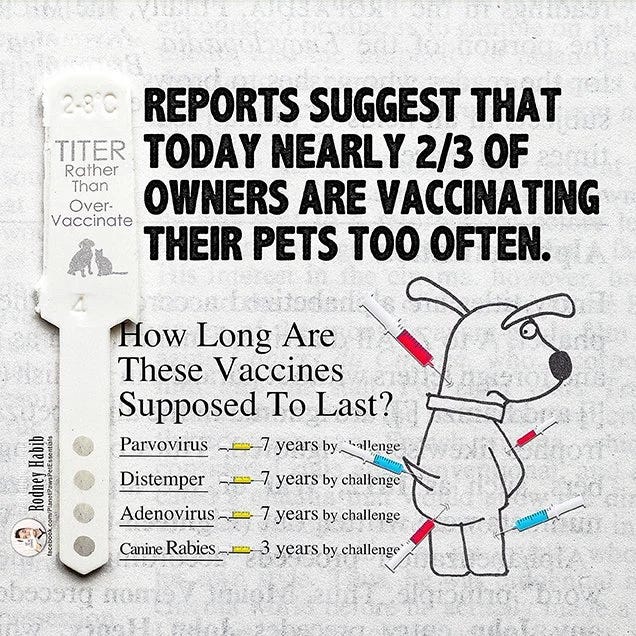
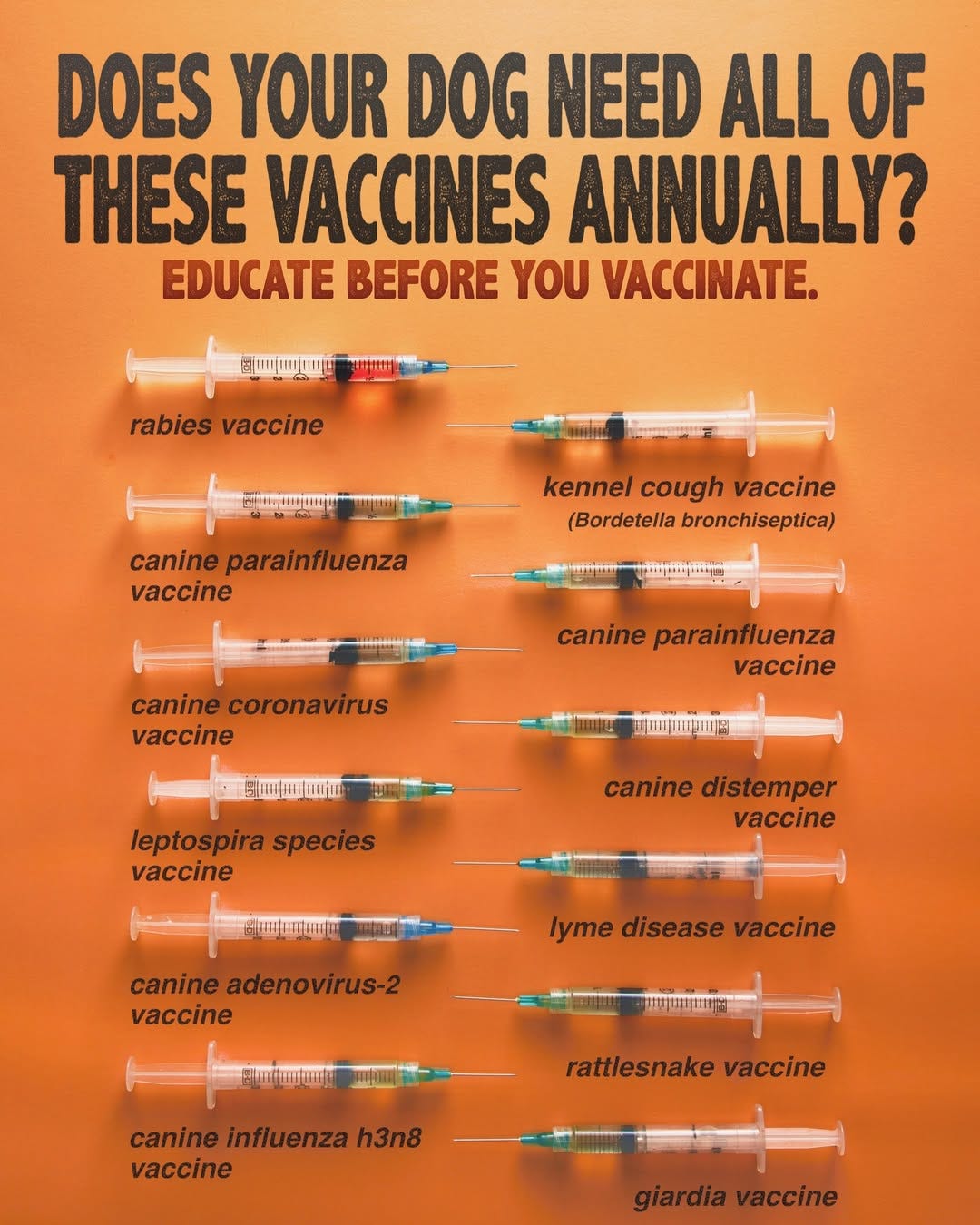
Many pet owners and veterinarians are increasingly concerned about routine over-vaccination. Core vaccines can provide long-lasting—even lifelong—immunity, yet many pets continue to receive boosters on a one-size-fits-all schedule. For example, a 7 lb dog receives the same vaccine dose as a 125 lb dog, and the 1-year and 3-year rabies vaccines are identical in formulation—the difference lies in the labeling and state-mandated vaccination intervals.
This is why titer testing is so valuable because it allows veterinarians and pet parents to determine whether immunity is already present before giving another vaccine.
Integrative vets emphasize that revaccinating a pet who already has strong immunity may be unnecessary and, in high-risk pets, potentially harmful. This is especially true for animals with vaccine sensitivities, chronic illness, immune compromise, or a history of adverse reactions.
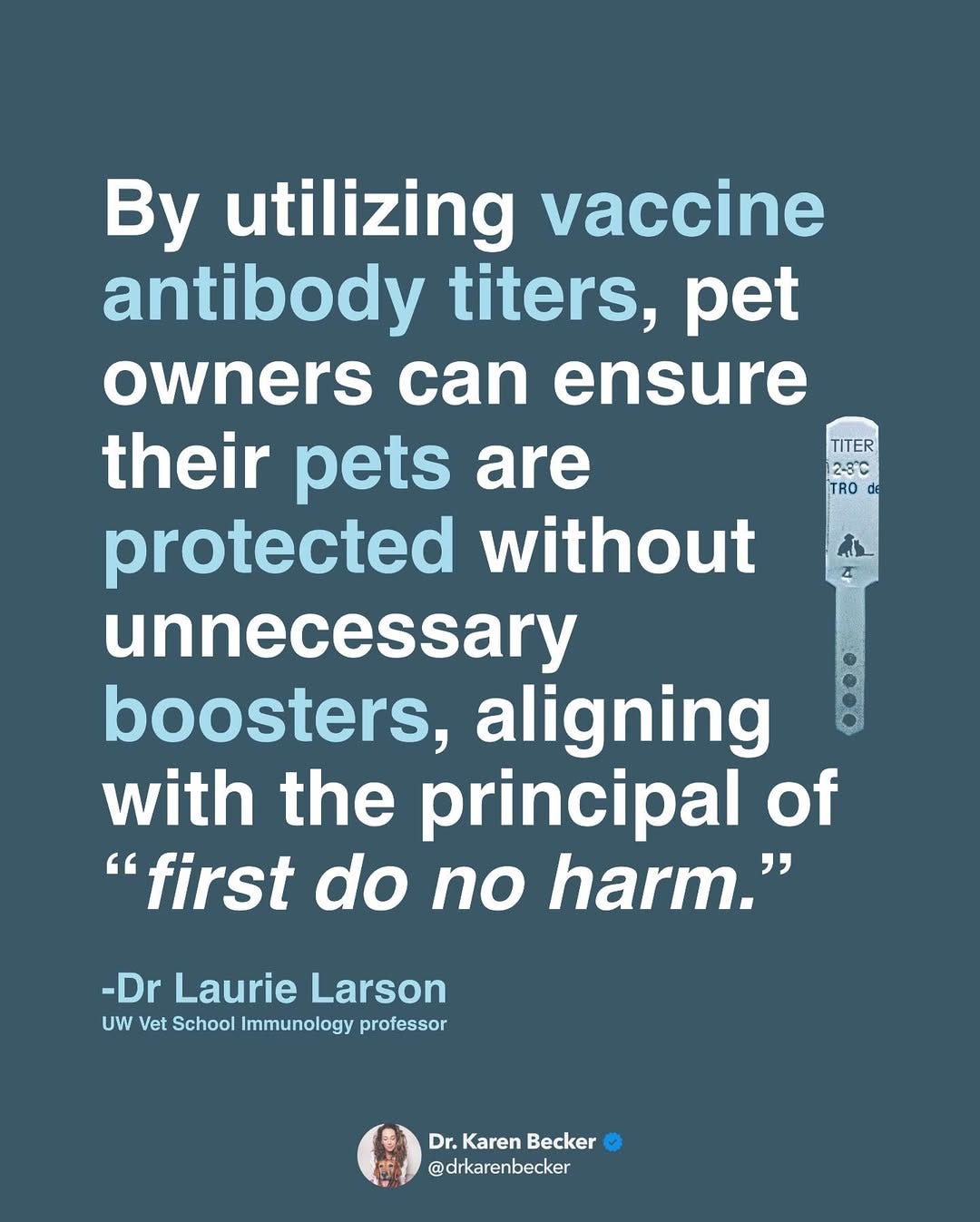
The goal is personalized medical care, not automatic revaccination. Your veterinarian’s professional judgment—guided by current immunology research and your pet’s unique health status—should come before outdated, one-schedule-fits-all habits.
The Gold Standard: Kansas State University
Kansas State University (KSU) is widely recognized as the gold-standard laboratory for core vaccine titers in the U.S. Many veterinarians can send bloodwork directly to KSU, making the process straightforward and often more affordable than going through third-party labs. Some clinics use corporate labs that act as middlemen, which can increase the cost without adding value. By sending samples directly to KSU, you can receive reliable results at a reasonable charge, typically just the cost of a blood draw, which can often be done alongside a wellness visit. Once completed, these results can serve as documentation of your pet’s immunity. Working together with your veterinarian, now is a great time for pet parents to consider titer testing as a safe, informed alternative to automatic boosters.
How to Order a Titer Test
You can work with your primary veterinarian or a trusted telehealth vet to order a titer test. Ask if they can draw blood and send the serum directly to Kansas State University (KSU) rather than use a corporate or third-party lab.
Here’s what’s typically included in the Telehealth cost:
Two meetings (Exam + Follow-up)
All four core vaccine titers
Dogs: Rabies, Distemper, Adenovirus, Parvovirus
Cats: Rabies, Herpesvirus, Calicivirus, Panleukopenia
Step-by-step instructions for obtaining the sample
Lab submission form & a prepaid shipping label
Results in 7–14 business days
This approach makes it easy for pet parents to get accurate results and guidance—whether through their regular vet or a trusted telehealth provider.
Final Thoughts
Titer testing empowers you to make informed, individualized decisions for your pet’s health. Checking antibody levels before vaccinating is a smart, science-backed way to keep pets protected—without unnecessary boosters.
A couple of common questions:
Do titers expire? Immunity itself might not, but regular testing helps confirm your pet still has protective levels.
How often should I check titers? Many pet parents do it every 1–3 years, or before any scheduled booster.
If navigating your pet’s vaccine history, ordering titers, or coordinating with veterinarians feels overwhelming, that’s where my Canine Concierge Service comes in. I help pet parents like you manage every step—from reviewing records and finding the right testing options to communicating with your vet and interpreting results—so you can make confident, personalized decisions for your furry family members.
Reach out today, and let’s simplify your pet’s wellness journey together!