

Lily, One Year Later
What Chronic Care Has Taught Me

A year ago, our life changed in a way I didn’t fully process until today. Sometime in the spring of 2025, Lily’s hind weakness progressed. I can’t remember the exact date — and honestly, that feels telling. When you’re in it (especially as a senior dog mom), the days blur together.
I remember noticing first she needed help standing to eat. Then I remember adjusting bowls, supporting her body, and telling myself we’d “take it day by day.” But by the Summer, Lily was officially paralyzed and there was no going back. You don’t get the luxury of sitting in fear for very long — your dog still needs you. So… we adapted


Lily can still express her bladder on her own, but I help her every few hours to make sure she’s fully emptying. I’ve learned her cues — she’ll huff and puff at me until I pay attention, and sure enough, once I check… bam! it all comes out. That consistency has made a noticeable difference in her comfort. Along with daily hygiene that is non-negotiable. We use manuka honey wipes followed by a topical antibacterial spray to help reduce bacteria. It’s not glamorous work, but these small routines play a huge role in preventing infections — especially for paralyzed dogs, who are more prone to moisture build-up.
We rotate acupuncture and chiropractic therapy monthly, alternating every 2 weeks. It’s become part of our rhythm — not something we “try when things get bad,” but something we use proactively to keep her body supported.
She also gets CBD & Mushrooms daily including an anti-inflammatory blend in the morning, seizure-support at night, and a calming blend as needed if she’s anxious or stressed. On top of that, Lily receives milk thistle, bladder, and kidney support — all chosen intentionally and adjusted as her needs change. None of this is about chasing perfection… it’s about maintaining her quality of life.


Over the last two years, I have noticed a frustrating pattern that Lily would always get UTIs in May and again in the Fall from September–November. So this Winter, I made two big changes!
First, I introduced phytoembryonic (a gemmotherapy approach) from Canine Herbalist Rita Hogan. Second, on days when I know I might not be able to express her bladder on time, I add Colloidal Silver to her water/food. With May approaching, my fingers are crossed 🤞 with cautious optimism that this new routine has finally broken that cycle.


Nutrition Has Been a Game Changer as Pork and Rabbit have become the cornerstones of Lily’s diet. By following a protein rotation and implementing a TCVM Water based diet on weekends, I’ve seen noticeable improvements in her bloodwork. When I was feeding beef and turkey more regularly, her BUN levels were much more elevated while this current rotation has supported her kidneys far more effectively.
For fun, she also gets:
Small Batch Pork treats with Chamomile which has recently become part of Lily’s routine because it supports more than just her mood! It truly helps soothe the nervous system, ease muscle tension, and digestion — all things that matter when a dog’s body is under constant stress from limited mobility.
Heart & Kidney treats with Beef have been a part of Lily’s routine for awhile now as I follow a “like feeds like” approach! These organ meats help support the heart and kidneys — which is especially important since Lily has both a heart murmur and kidney disease. I rotate beef with pork that so she gets targeted support without overwhelming her system.
Bone Broth has also become a regular part of Lily’s routine nourishing her body, supporting her joints, and providing gentle, easy-to-digest nutrients — all essential when managing chronic conditions and mobility challenges. Although, I’m still on the lookout for more pork and rabbit options to keep her rotation varied rather than popular Beef & Chicken.
Looking Back — and Looking Forward 🐾💗
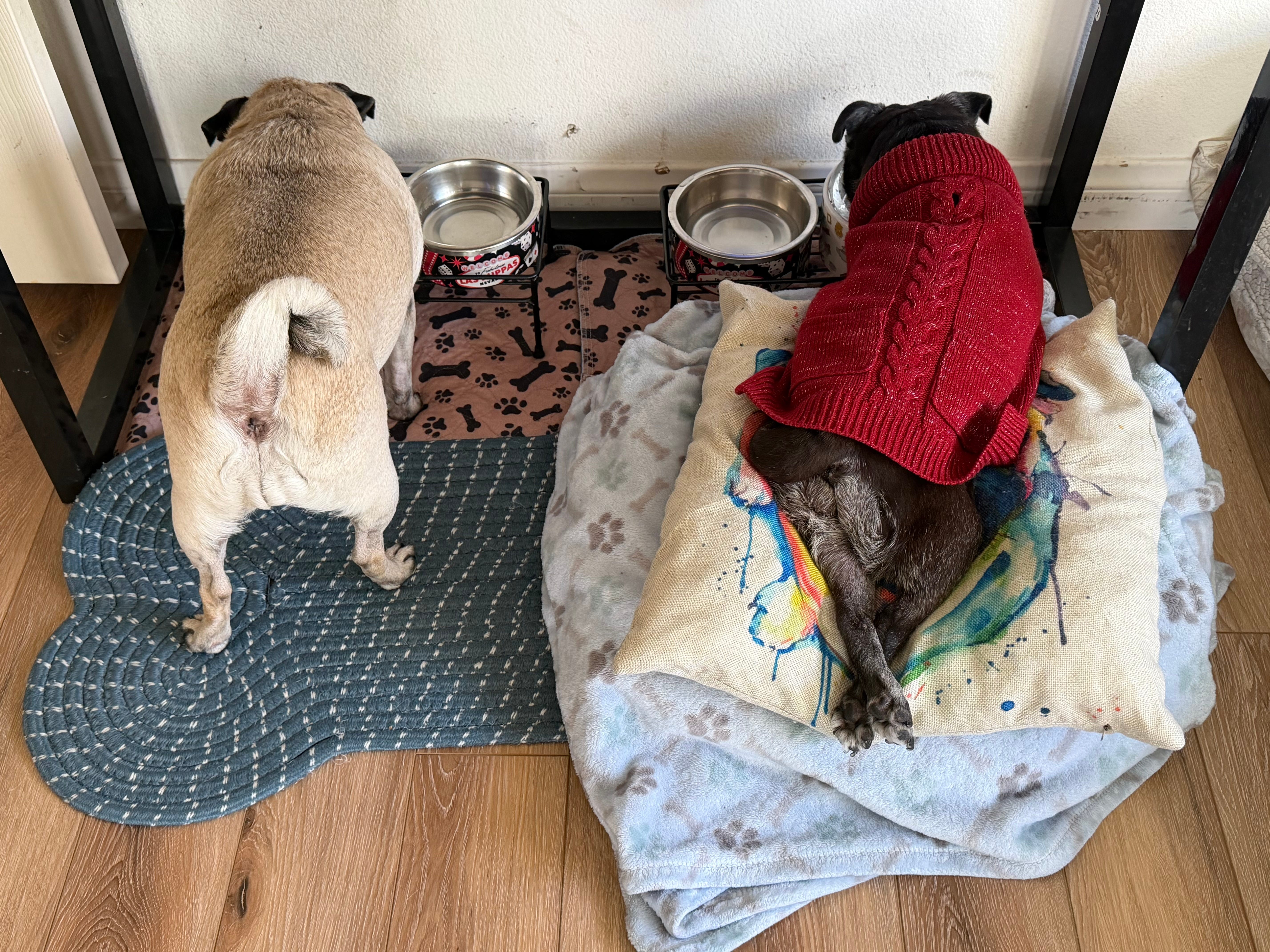
When I first adopted Lily, she was actually diagnosed with Grade 2 Luxating Patella, NOT Pug Myelopathy. Thankfully, it never caused her much trouble — there were only a few times I had to gently adjust her joint back into place, and her vets never stressed surgery as necessary. These last 12 years with Lily have definitely taught me to be more observant, proactive, and far less dismissive of “minor” issues.
If there’s one supplement I wish I had introduced earlier for Lily, it’s Myos Green Lipped Mussel. I didn’t start using it until about 4 months AFTER her suspected IVDD diagnosis — and while it’s been supportive, I can’t help but think about how different things might have looked if I had implemented it proactively instead of reactively.
As Darla was recently diagnosed also with Grade 2 Luxating Patella — the same diagnosis Lily had when I first adopted her — Myos was the first supplement I added to her routine. Not because something is “wrong,” but because I now understand how much joint, muscle, and connective tissue support matters before degeneration sets in. It’s been eye-opening to see what’s common in pugs and how much earlier awareness can make a difference.
Caring for a paralyzed dog — managing bladder expression, hygiene, supplements, therapies, and nutrition — takes a toll. Some days, it’s exhausting, mentally and physically. And that’s okay. Part of quality care is also being gentle with yourself, recognizing your limits, and giving yourself grace. These lessons have shaped everything I do now. From watching Lily thrive despite her challenges, to caring proactively for Darla, I’ve learned that mindful, intentional support — for our dogs and for ourselves — makes all the difference.

This was so great to read! Thanks for taking the time to share all of your specifics so that it might benefit others out there and the same situation. Thanks for being one of the extraordinary people who goes the extra mile took care for their dog. I’m finding more and more people out there who give everything they can to take care of their friend! Searching and sniffing games inside were really powerful for my Charlie when he was less mobile. But it sounds like you’re well equipped and doing an awesome job!
Really powerful stuff on the proactive vs reactive mindset shift. The luxating patella with Lily and now seeing Darla with the same diagnosis must be such a tough reminder. I went through somthing similar when my second cat developed kidney issues eariler than the first. That sense of "if only I'd known" is heavy but doing all this for Darla from th jump is how we learn and adapt.